Wednesday, 23 September 2015

Saturday, 12 September 2015
Weekly New/Digital Media homework
 - Hillary Clinton revealed to have over a million fake Twitter followers - more than any other presidential hopeful
- Hillary Clinton Has More Than a Million Fake Twitter Followers. What Does It Mean?
The sheer fact that outlets such as Yahoo! Tech and DailyMail report about the quantity of followers attained by Hillary Clinton, among other presidential candidates, highlights the profound influence that social media has on something as important as the election responsible of determining the most powerful figure of the free world. Statistics are closely examined on this matter and those with more followers are deemed as more viable candidates for the campaign, the leader of which is currently Donald Trump.
Straight Outta Compton's viral marketing on digital media was something which us all have encountered while surfing the web or scrolling through beloved social sites. This is confirmed in the embedded article as it runs the readership through the numerous corporate decisions made in the dawn of the premiering of the Universal biopic. Residue of this viral campaign still exists due to the personal aspect provided to the 'Straight Outta ---' trademark.
A female cosmopolitan commutes through the streets of Manhattan in daytime transitioning to the evening and night and encounters over 100 occasions of interaction by other men. In my opinion my views differ from the statement of the campaign as I wouldn't denote the exhibited acts as harassment, as the majority of instances were civil. However, some of those were legitimate for the cause and should be socially addressed. It is noteworthy to acknowledge the controversial reception this campaign received via social media inc. Twitter.
Friday, 28 August 2015
MEST4 Summer project
MEST4 Summer project
Chosen text of investigation: Orange Is The New Black
(Netflix original series)
Media Representations
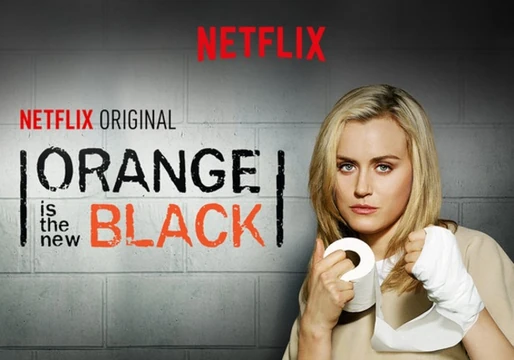 The focus of my critical investigation into the Netflix exclusive: ‘Orange Is The New Black’ will be warranted actuely, however not exclusively, to women. Although the comedy-drama series is most recognisably rewarded for its humanistic depiction of prisoners (as praised by Seth Abramson of The Washington Post), I was personally drawn to investigate gender and sexuality as OITNB employs a predominantly female cast. Now hold your horses, yes we have shows such as Girlfriends - undoubtedly a great show, acknowledgedly a millennial breakthrough in the respects of it not just having a cast preponderated by women, but more so because this was a show, for the first time ever on mainstream television, dedicated to black women. And of course we have ‘Sex and the City’, ‘Charlie’s Angels’, ‘Naked News’, ‘The ‘L’ word’, ‘American’s Next Top Model’, ‘A Model’s Life’.
 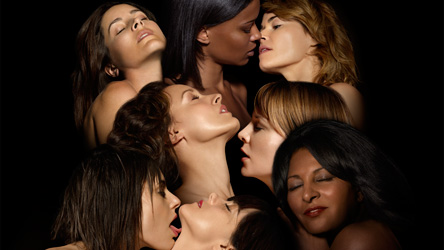 However, the common denominator of all of these shows is very obvious, as much as ever are women sexualised in these texts and consistently used for the voyeuristic gratification of audiences. And this is what fuels the basis of my investigation into OITNB, because what Jenji Kohan has acclaimed to craft here is by no means a story of young women aspiring to capitalise off and commercialise their (probably fake) tits and nips, nor is it a series of provocatively dressed women supposedly cracking cases by the orders of a creepy man over a speakerphone. Arguably, OITNB differs by dimensionalising the women who are granted complex traits linked to narratives of their conviction which convince an audience to sympathise for them ('Orange Is the New Black' offers complex look at LGBT women). This raises accusations of reverse-sexism as the actions of men in the series are represented in a higher magnitude of negligence than even those of the female felons. {examples: drugs, sex, violence etc. - compared to men’s stories - not as severe from a sexually impartial perspective} Audiences are encouraged indubitably to be sympathetic for the women in the show, by the manipulation of representations which I’d say are fair and accurate to the extent of the characters reflecting valid social realism, but not to the extent that no male characters are constructed to be favourable by the audience. {Even the protagonist’s brother, who is in fact dominated by his female counterpart in the marriage}
 Media Languages and Forms
A predominant and rather broad connotation of the text revolves around the title: ‘Orange Is The New Black’, which plays on the 80s phrase “- is the new black” used to describe a trend or change of some sort which can be deemed popular, cool or fashionable. However, in the premise of prison life, where ‘orange’ is the stereotypical colour for prison garments, Piper Chapman (the protagonist) faces an ironic alteration in her living as she is to transition from her life as an attractive, white, affluent New Yorker to the polar opposite of fashionable, as a prisoner in a New York federal penitentiary where she is forced to embrace the realities imposed upon her - survive in prison.
An interesting manipulation of the cinematography and mise-en-scene throughout the show is demonstrated as the audience perceives everything in Litchfield prison through the eyes of Piper. Due to this, as Piper initially enters the federal institute, close-up panning shots depict the ruthlessness of the prisoners around her upon their introduction - complemented with scornful facial expressions and obscene language. However this begins to subside correspondingly to Piper’s increasing courage and resistance to the harshness surrounding her in prison, after which the audience should witness a change in the patterns of cinematography and mise-en-scene to be in favour of the prisoners in order to evoke sympathy rather than fear.
Uzo Aduba on OITNB, Charleston, and the Confederate Flag - A star of the show sheds light on key socio-political issues concerning themes covered in OITNB. This is inclusive of the controversial Confederate flag.
Narrative
OITNB, being based on the memoirs of writer and ex-convict Piper Kerman, present the accounts of the protagonist’s trials and tribulations through her own experiences. Within the expository 4 hours of the show, the audience is familiarised with the conviction stories of characters including of course - Piper, but also Red, the cafeteria mogul of the prison, for whom the audience is placed on the brink of a multitude of opinions instead of simply disliking her due to her unfavourable representation towards the protagonist. The reason for this is because of the narrative’s craftation into exhibiting retrospective scenes of the characters’ pasts preceding their conviction. These flashbacks are applaudable also for their diligent integration into the script as the dialogue featured in the scenes are synchronised to
the present experiences of the character in question - leaving the audience gasping in awe and questionability regarding the seamlessness of the narrative. The delineation of characters is also demonstrated witful as the audience is constantly barged into the disposition of accepting fallacies about characters who are temporarily vilified, but may even be righteous and likeable. Warranting this, it is important to acknowledge the producer’s representation of moral conflicts such as rape, drug abuse and most interestingly: prejudice against minority groups of race, gender, body types and sexuality.
Orange Is the New Black's Irresponsible Portrayal of Men - OITNB absolutely vilifies men in the entirety of the show, to the extent that it becomes an unrealistic representation of the social system in nations such as the UK and America. Because of this, the show arguably loses credibility in the sense of it striving to encourage a social movement to raise awareness of prejudice faced by minority groups - and as a consequence, the arguments for the liberation of women and other oppressed groups lose validity
The comedy drama is consistent in its form as it creates opportunity for comic relief in all cases, even driving towards satirising sensitive issues such as religion - an act potentially placing the show in its susceptibility of controversial criticism. Demonstration of generic themes are provided in wholesome as we are presented with a clever script packed with puns and well-timed references, as well as slapstick humour and dark comedy. The show does not at all fail in the drama department either as the audience is placed consistently in a position of feeling empathetic for the characters in question of the multi-strand narrative - thus provoking a wide array of emotions to be felt. Notably, the actors and producers of the show are closely related to the genre of OITNB.
Media Institutions
Produced by Jenji Kohan for Netflix in association with Titled Productions and Lionsgate Television. Kohan is at an utmost influential to the craftation of the show as she herself is liberally vocal on key themes represented throughout. As a commercial institution the
intention of prime is to entertain and receive good reviews and reception from a large audience of Netflix subscribers.
Media Values and Ideology
Being an 18-rated show, OITNB serves as a controversial series of explicitness and liberally exhibited material which would receive a reaction of more severity than ‘A Clockwork Orange’ did three decades ago for its risque content. This does nonetheless reinforce the sincerity of the show in fearlessly presenting a reality of society in the media which subverts stereotypes of LGBT communities, women and ethnic minorities.
OITNB star Ruby Rose on why she decided not to transition - The cast is parallel as a reflection of the narratives integrated into the series. Actors inc. Ruby Rose are global opinion leaders on sensitive socio-political issues and therefore serve the show with credibility and increased relevance - adding social value due to larger coverage.
Media Audiences
It can be stately claimed that OITNB is addressed to no particular gender or race, however it could be narrowed to the age range of above 14 years of a B,C1,C2,DE class, primarily of the reformer and explorer psychographic profile. Assumingly, the producer had curated the programme for viewing to a modernised audience, (which also corresponds to its exclusivity on the Netflix online platform) due to its liberal presentation of sex and other sensitive topics - like, come on, the show’s first 30 seconds features an intimate scene between the protagonist and another woman in the shower. The dominantly preferred reading of the overall text is in support of prisoners to be understood with more care and concern to their past. The alternative reading however could suggest that the situations presented in the show highlight the dawn of a social threshold in first-world society, anticipating the uprise of minority groups and the downfall of those in power, more conservative groups which may object to the liberation of those oppressed.
Audience pleasures derived from the show in overall are inclusive of voyeurism, the male-gaze, the female-gaze, as well as the provision of surveillance into prison-life in New York and most importantly - entertainment.
My personal reading is to be deemed by my background as a teenage ethnic minority in the suburbs of metropolitan London. Due to this my opinions and judgements differ from those who are elderly and conservative as I am a lot more accepting towards those who are marginalised.
Relevant books:
- The Colour Purple
- The House on Mango Street
- Their Eyes Were Watching God
- Native Son
- The Taming of the Shrew
Online comments:
Friday, 26 June 2015
The Internet: Task (video)
Friday, 19 June 2015
Short answer - (12A) rated film content
"Have Hollywood attitudes towards content in 12A films become more liberal or have audiences’ film desires changed?"
The core substance of this question is philosophically investigative in the sense that there is a reciprocal cause and effect between the two co-variables of content sensitivity and the audience's desires. It may be argued that Hollywood attitudes have become a lot more liberal today than traditionally before as previously taboo topics within categories of sex, gender, ethnicity and disability are a lot more openly portrayed and available for discussion in modern narratives of films. This can correlate with institutions adopting the idea of raising awareness for audiences and the much speculated craving for controversy which has been proposed by theatrical critics. Therefore, to some extent it could be rightfully concluded that Hollywood attitudes are directly reflective of the audience's desires, possibly so because of the increased influence of users on the producers of the media.
Thursday, 18 June 2015
Short answer - Female stereotypes
"To what extent do the female characters in 'The Dark Knight Rises' and 'SALT' challenge traditional female stereotypes?"
Despite of not have watching the two films myself, from the attained information from the exemplar answer, I have established that the female characters from the two films challenge traditional female stereotypes to a high extent. The reason for this is because universally traditional, pre-feminist expectations of women entailed their socio-political stance to be dormant as they were expected to act submissively to men who were the leaders of this patriarchal society. This is directly contrasted with the representation of the catwoman, for instance, who takes an active role as a leading female character to vigilantly and independently (notably without the assistance of a male figure) save others as well as brutally kill her enemies (a lot of which happen to be men, thus further disputing the traditionally imposed idea that hyper-masculinity means great power and strength.
It may be arguable on the other hand that the women are yet succumbing to traditional female stereotypes as they are eventually the sexually objectified playthings of the men in the films. This is apparent in the scene of the catwoman's sexualised submission to a man's aggression as she is coerced against a wall. This reinforces the role of women as merely sexually appealing to men as this scene would satisfy a primarily male audience, as theorised by Mulvey's 'male gaze' theory. However, this can be refuted by the claim that women exploit and in frequent cases of contemporary media - flaunt their sexuality as a means of their own benefit and power over men. This is overlooked due to a gemini effect created by mainstream media which establishes women to be on the weaker end of the process of transmitting sexual satisfaction to a man, thus forgetting that women may even intend to exploit their physicality.
Thursday, 11 June 2015
The representation of race/ethnicity in the media [Media Magazine task]
"Is it cos I is British?" (MM42)
- Inheritance of American values to define black British stereotypes
- Fixation on money/wealth and ideologies of male sexual dominance reinforced by music inc. Hip-hop, portraying the stereotype for young black men
- Tory MP: " ‘…leftie multicultural crap…"
- British 'hood' dramas
- The Crouches ('03), T-F-P-o-BelAir
- Other racially-centric dramas inc. Citizen Khan
"A very British doctor" (MM35)
- Britishness amplified; iconography of black taxi or bright red London bus
- Desire to reflect the country’s multi-racial and multicultural diversity
- "Rose is white British and working class, while Martha Jones is black British and middle class, and Donna Noble, again, white British and middle class. With such cultural backgrounds, the companions allow the narrative to positively expose the range of culture, race and class within contemporary Britain by incorporating family, friends and colleagues into the adventures they have with the Doctor."
- The character is consistently played by a British actor with an English accent (even when played by Scottish actor David Tennant).
"An exploration of independent indigenous Australian film" (MM43)
- The Sapphires
- Former governments tried to "breed out the blackness"
- Light to dark Australian history
Subscribe to:
Posts (Atom)